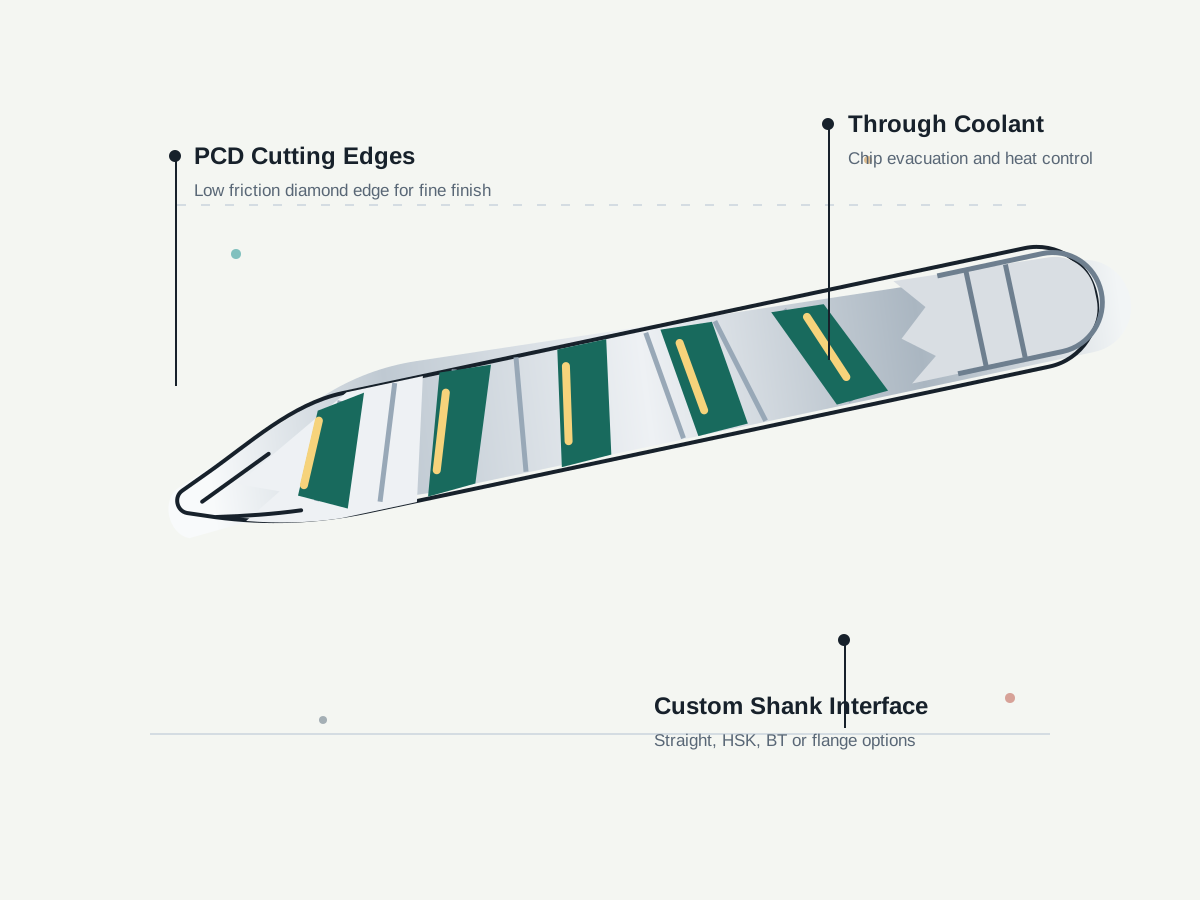
What Is a PCD Reamer?
A PCD reamer is a precision hole-finishing tool that uses polycrystalline diamond cutting edges to improve bore size, roundness and surface finish after drilling, boring or pre-machining. PCD reamers are most often used in aluminum alloys, non-ferrous metals, graphite, plastics, CFRP and abrasive composite materials.
For XRZ, a PCD reamer is not only a cutting tool. It is a custom production solution designed around the part drawing, material, tolerance, machining allowance, coolant condition and required tool life.
How Does a PCD Reamer Work?
A PCD reamer removes a small finishing allowance from a pre-machined hole. The tool uses accurately ground cutting edges and stable guidance to size the bore, improve roundness and produce a finer surface finish. Coolant and chip evacuation are important because reaming is a finishing operation with limited room for chip packing or rubbing.
PCD Reamer Advantages
- High wear resistance in abrasive and non-ferrous materials.
- Stable hole accuracy and repeatable bore size in production.
- Fine surface finish when geometry and allowance are matched correctly.
- Long tool life that can reduce tool changes and downtime.
- Lower cost per hole in high-volume CNC machining.
PCD Reamer Types
Custom PCD Reamers
Designed from part drawings for specific tolerance and tool-life targets.
PCD Step Reamers
Finish multiple diameters or chamfers in one tool pass.
PCD Form Reamers
Machine special bore forms, transitions and profiles.
PCD Guide Reamers
Improve stability for demanding roundness and surface finish.
Multi-Step PCD Reamers
Combine several finishing features for high-volume parts.
PCD Reamer Applications
PCD reamers are widely used when precision bores must be held across repeated production cycles.
- Automotive cylinder heads, engine blocks and transmission housings.
- Aluminum machining for EV housings and lightweight components.
- Compressor, hydraulic and pneumatic components.
- CFRP, GFRP and composite structures.
- Electronics, graphite and non-ferrous precision parts.
PCD Reamer Materials
PCD is typically selected for materials where diamond cutting edges provide strong wear resistance and low friction. Common materials include aluminum and AlSi alloys, copper, brass, bronze, graphite, plastics, CFRP, GFRP and other abrasive composite materials. PCD is generally not the default choice for ferrous steel machining because diamond can react unfavorably at high temperature with iron-based materials.
PCD Reamer Geometry
Geometry defines how the reamer cuts, guides and evacuates chips. Important design choices include flute count, lead angle, cutting edge length, chamfer design, guide pad support, step geometry, shank interface and coolant path. XRZ customizes these features around the part material and bore requirements.
PCD Reamer Tolerance
A PCD reamer must be designed around the real tolerance target, not only the nominal diameter. Important specifications include bore diameter, size tolerance, roundness, cylindricity, surface finish, hole depth, interrupted cuts and machine capability. Stable allowance and proper holding are also critical to final bore quality.
PCD Reamer Tool Life
Tool life depends on material abrasiveness, cutting speed, feed, finishing allowance, coolant, edge preparation and machine stability. In high-volume aluminum and composite machining, PCD reamers can provide significantly longer life than carbide tools, which helps reduce tool changes, offset adjustments and inspection drift.
PCD Reamer vs Carbide Reamer
Carbide reamers are cost-effective for many general materials and lower-volume jobs. PCD reamers are preferred when non-ferrous or abrasive materials cause fast carbide wear and when high-volume production needs stable bore quality. Read the full comparison: PCD Reamer vs Carbide Reamer.
PCD Reamer vs Drill
A drill creates or opens a hole. A reamer finishes a pre-machined hole to improve size accuracy, roundness and surface finish. For precision bores, drilling alone usually cannot replace a finishing reaming operation.
How to Choose a PCD Reamer
To choose the right PCD reamer, start with the part drawing and process problem. Provide the bore diameter, tolerance, material, hole depth, machining allowance, through-hole or blind-hole condition, machine interface, coolant condition, production volume and current tool failure mode.
Custom PCD Reamer Design
XRZ designs custom PCD reamers around workpiece material, hole geometry, tolerance, machine capability, coolant and tool-life requirements. Custom options include step forms, guide pads, internal coolant, modular shanks, special chamfers, multi-diameter tools and application-specific edge preparation.
PCD Reamer Cost
A custom PCD reamer often costs more than a carbide tool at purchase, but the correct business comparison is cost per hole. Tool life, machine uptime, inspection stability, scrap reduction and reduced tool changes all affect the real ROI of PCD tooling.
FAQ
What is a PCD reamer used for?
It is used to finish precision holes with controlled size, roundness and surface finish, especially in aluminum, non-ferrous and abrasive composite materials.
Can XRZ make a custom PCD reamer from a drawing?
Yes. XRZ can design a custom PCD reamer around the drawing, material, tolerance, hole depth, coolant condition and production target.
Is a PCD reamer better than carbide?
It depends on the material and production volume. PCD is often better for high-volume aluminum, graphite and composite machining where carbide wears quickly.
What information is needed for a PCD reamer quote?
Provide bore diameter, tolerance, material, hole depth, machine interface, coolant condition, annual volume and current tool issues if available.